Named origin and cultivar
Specific geography and olive variety give you more information than generic Italian imagery.
 AureoLife
The AureoLife olive oil guide
How to taste, store and choose EVOO with more confidence—and which signals matter once the marketing language is removed.
Begin with the label
“Premium” and “luxury” are not production facts. Look instead for a named origin, a clear harvest, storage protection, traceable production and information that belongs to the finished oil.
Five useful checks
Specific geography and olive variety give you more information than generic Italian imagery.
Olive oil is agricultural. Time, crop and finished-lot evidence matter.
Dark glass or opaque packaging helps protect the oil; store it away from the hob and window.
Fruit, herbs, artichoke, almond, bitterness and pepper can all signal character and freshness.
Polyphenol, organic and origin claims should be supported by relevant certification or finished-oil analysis.
Storage
Keep EVOO tightly closed in a cool cupboard, away from direct light and heat. Buy a format you will actually use while it is fresh.
Refrigeration is usually unnecessary; consistent, moderate storage is more practical.
Taste the oil on its own before the food changes it.
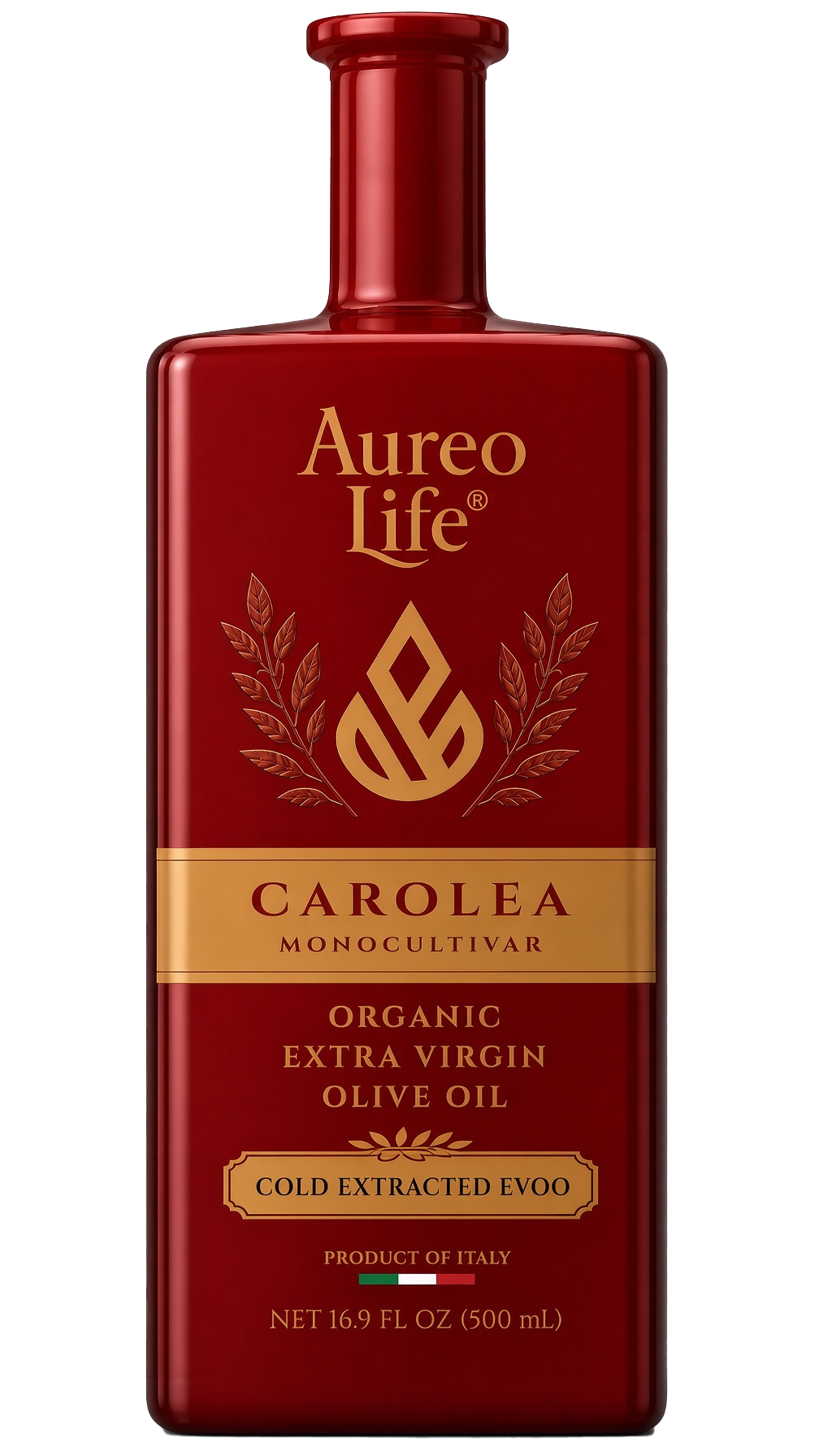
Meet AureoLife Carolea, with a named cultivar and documented Calabrian origin.